
National Semiconductor: The COP before the COPS
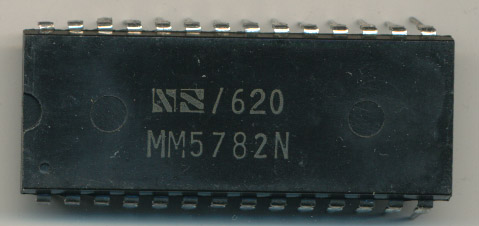
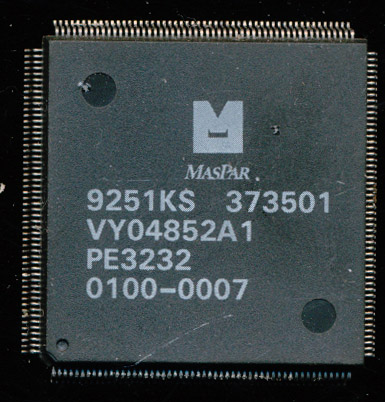
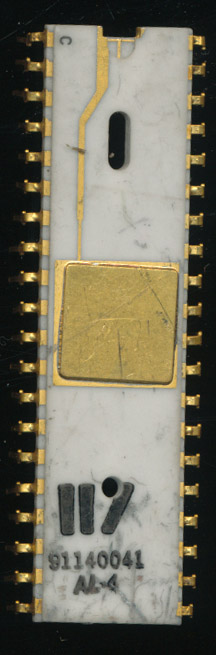
National Semiconductor MM5782N – 400KHz 1976
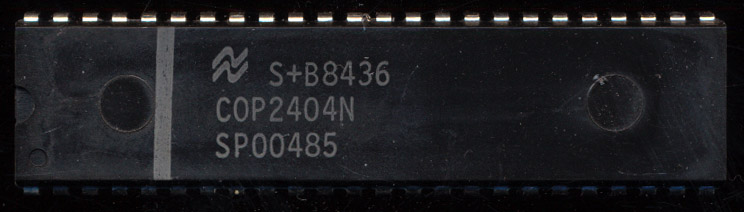
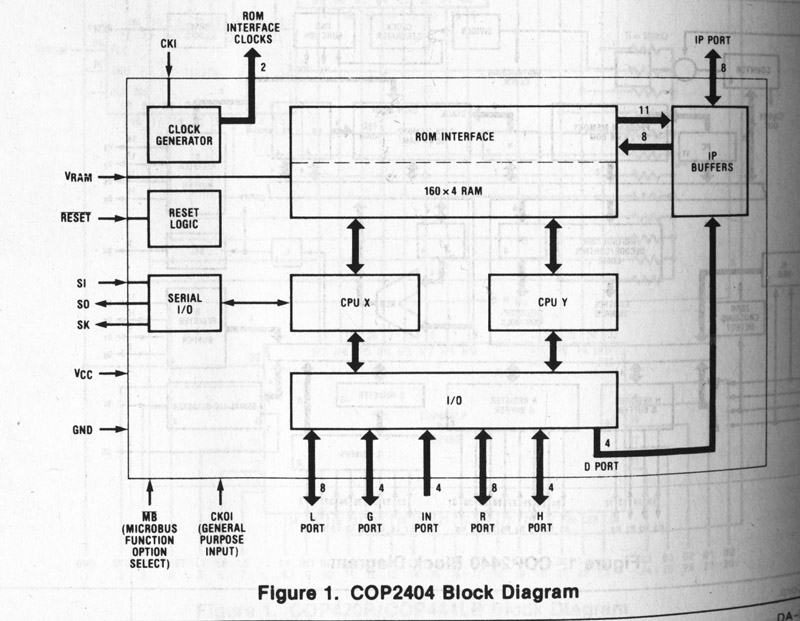
In August we detailed the COP2404 and the COP400 line of 4-bit microcomputers by National Semiconductor. This NMOS design originated in 1977 and was made for over 30 years. It, however, was not the the first COP line of National Semiconductor. In fact the COP400 family was referred to as the COPS II for a brief period in the 1970’s. If the COP400 was the second in line then what was the ORIGINAL COP microcomputer?
That would be the COPS I of course, better known as the MM5781/2 and its derivatives, the MM5799, MM57140 and MM57152. These microcomputers were released in 1976 and were made on a volume PMOS process. They were designed to be inexpensive and simple to use. The design of the 5781/2 actually started with the MM5734 which was a single chip accumulating calculator chip. The differences are not as big as one may think. A multi-function calculator with memory needs an ALU, registers, ann accumulator and instruction decoding, as well as very limited memory and fairly extensive I/O (to run the display and read inputs from the keyboard). National saw this as an opportunity to capture a bit of the low-end market. They already had the IMP-16 for their high end, the SC/MP for the mid range, as well as second sourced Intel MCS-4 and MCS-80. What they lacked was something to compete with the likes of the WD1872 and the TI TMS1000 series as well as the rise of the Japanese 4-bit solutions from NEC, Toshiba and Sanyo.
The 5781/2 was a 2 chip solution, together they formed a microcomputer. The 5781 contained the program ROM (2048 x 8 bits), as well as the program counter and some control logic. The 5782 was contained the full ALU, the accumulator, the instruction decoder, and 160×4 bits of RAM. It could execute 33 different instructions. Clock speed was 70-400KHz and was provided by an off-chip oscillator.
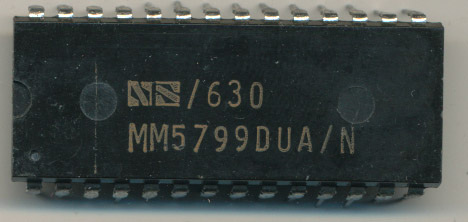
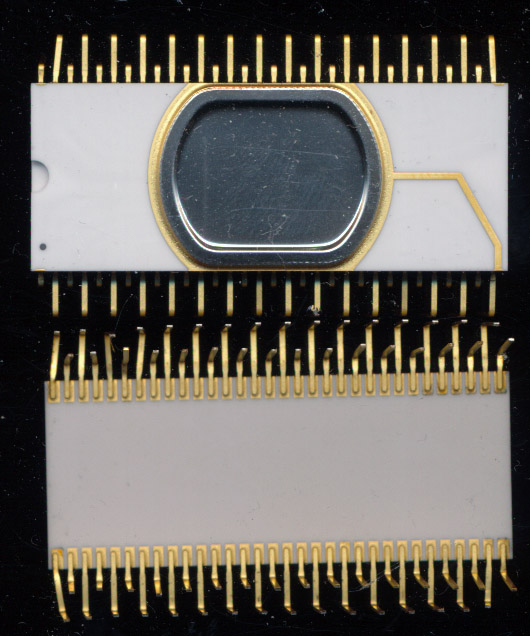
National Semiconductor MM5799 – Single chip COPs
National combined the 5781/2 into a single 28 pin chip called the MM5799. It contained all the logic of the 5781/2 but with a smaller amount of RAM (96 x 4 bits) and ROM (1500 x 8 bits). Clock speed remained the same but the instruction set was expanded slightly to 41 instructions. Two other versions were also made that had more extensive I/O. The MM57140 which had build in LED drivers, and the MM57152 which was the same, but had built in fluorescent display drivers (this was the 1970’s after all). The ‘140 and ‘152 had 36 instructions 55 x 4 bits of RAM and 630 x 8 bits of ROM. Maximum clock speed was also reduced to 280KHz.