
Warning: is_readable() [function.is-readable]: open_basedir restriction in effect. File(D:\Plesk\VHOSTS\cpushack.com\httpdocs/wp-content/plugins/D:\Plesk\VHOSTS\cpushack.com\httpdocs\wp-content\plugins\lazyest-gallery/lazyest-gallery-en_US.mo) is not within the allowed path(s): (D:\Plesk\VHOSTS\cpushack.com\httpdocs\) in D:\Plesk\VHOSTS\cpushack.com\httpdocs\wp-includes\l10n.php on line 334

Warning: is_readable() [function.is-readable]: open_basedir restriction in effect. File(D:\Plesk\VHOSTS\cpushack.com\httpdocs/wp-content/plugins/D:\Plesk\VHOSTS\cpushack.com\httpdocs\wp-content\plugins\lazyest-gallery/lazyest-gallery-en_US.mo) is not within the allowed path(s): (D:\Plesk\VHOSTS\cpushack.com\httpdocs\) in D:\Plesk\VHOSTS\cpushack.com\httpdocs\wp-includes\l10n.php on line 334

Archive for the 'Processor News' Category

May 9th, 2011 ~ by admin

Intel’s Ivy Bridge: 50 Years of flat transistors come to an end

Traditional microprocessor transistors are "planar" or flat as they pass through the switching gate

April marked the 50th anniversary of Robert Noyce’s patent on making silicon IC’s with a planar process, a concept that has changed little since then.  That is, until this month, when Intel announced their new 22nm process, a process that will not be restricted to planar transistors.  Intel, like Hollywood as of late, has gone 3D, Instead of a transistor being built in planes (layers) Intel has developed a way to produce transistors with source/drain spanning several planes on the die, essentially they are formed vertically, rather then horizontally.

This in an of itself is not remarkable, it has been thought of, and done before. What Intel did is make it happen on a commercially viable process.  Intel claims to be able to initially manufacture these on a commercial scale at only a 3% cost increase over traditional planar processes, and of course expects that 3% added cost to drop to zero, or in fact result in a cost savings, as the process is refined.

The Tri-Gate system features 3D "fins". This allows the same surface area, in a smaller die area.

What this allows is 2-3 times the number of transistors in the same space as a planar process (assuming the same process size).  Intel plans to use this process for the 22nm node. Intel’s first processor, the 4004, was constructed on a 10 micron process with 2300 transistors.  Thats 500,000 times larger features and over a million times less transistors, yet it consumed almost a 1 watt of power.  With Intel’s new 3-D 22nm process it should give Intel the break they need into the mobile phone market, a market they have been desiring to reenter ever since selling off their mobile ARM (PXA//StrongARM) division to Marvell several years ago.

Tags:

Spread this post:
  • Digg
  • Sphinn
  • del.icio.us
  • Facebook
  • Mixx
  • Google Bookmarks
  • DZone
  • Reddit
  • StumbleUpon
  • TwitThis
March 12th, 2011 ~ by admin

Apple A5 Updated Info

Now the UBM Techinsights and iFixIt have completed their teardowns of the iPad 2, and benchmarks have been run we now know that the A5 is in fact a dual core, made by Samsung, and clocked at around 900MHz.  It also includes the PowerVR 543 dual core GPU as we suspected in our previous post.

Apple A5 Processor

Also we now have an actual image of the chip, rather then the photoshopped one Apple used in their presentation.

Tags:
,

Spread this post:
  • Digg
  • Sphinn
  • del.icio.us
  • Facebook
  • Mixx
  • Google Bookmarks
  • DZone
  • Reddit
  • StumbleUpon
  • TwitThis

Posted in:
Processor News

March 2nd, 2011 ~ by admin

The iPad 2: Apple joins the Dual-core crowd.

Apple A5 - Actually a Photoshop'd A4

Today Apple announced the iPad 2, which unless you are living in a cave, you likely have heard about more then you wish already.  The iPad 2 debuts the next evolution in Apples own ARM processor.  The A4 (which was a single core 1GHz class ARM Cortex-A8 made by Samsung) is out, and a dual core replacement is in.  Details are thin until a proper tear down is done, but it is most likely a 1GHz dual core ARM Cortex-A9 with a dual core PowerVR 543 replacing the single core PowerVR 535.  It is most likely fab’d again by Samsung.  Apple’s press shot during their presentation is NOT an A5, the PR folks at Apple simply Photoshopped the original press shot of the A4 from last year. Note the date codes on the chip are 0939 and 0940 (sine their is 2 dies in it), which is late 2009.

Apple also made the somewhat deceptive remark that the iPad 2 is the first dual core tablet to ship ‘in volume.’  HP’s Touchpad runs a dual core Snapdragon and is shipping ‘soon.’  LG is shipping their tablet this month with a very capable Tegra 2, and Samsung will follow with the Galaxy Tab 10.1, also Tegra 2 powered.  RIM’s Playbook which is in beta, used a TI OMAP 4430 dual core Cortex-A9.  This puts Apple right in the mix of the dual core frenzy that will playout this year.

Apple A4 Press shot, notice the identical markings to the A5

We’ll update the photo as soon as someone (likely the folks at iFixIt) get and tear one down.

Tags:
, ,

Spread this post:
  • Digg
  • Sphinn
  • del.icio.us
  • Facebook
  • Mixx
  • Google Bookmarks
  • DZone
  • Reddit
  • StumbleUpon
  • TwitThis

Posted in:
Processor News

February 14th, 2011 ~ by admin

Processor News Round-up: More cores in more places

The last week has been filled with new processor announcements, mainly for phones, but cameras as well. (yes they run some powerful processors now too).

TI is barely shipping products with its dual-core OMAP 4 applications processor and has already announced its successor, the OMAP 5.  The OMAP 5 will be a 2GHz dual core ARM Cortex-A15 (the next ARM generation after the A9). It also includes a pair of ARM Cortex-M4 processor.  the Cortex-M4 is a 150-300MHz microcontroller oriented processor.  This will allow the OMAP 5 to run basic background tasks on the slower (lower power) cores while reserving the high power cores for tasks that actually need them, increasing battery life.

Broadcom continues its drive to enter the smart phone business with the BCM28150, a 1.1GHz dual core ARM Cortex-A9 compatible with Google Android.  In December they released the BCM2157, a 500MHz dual core ARM11 processor for low-end smart phones

Samsung decided to rename the Orion processor (announced back in November) to the Exynos 4210.  A bit of a mouthful compared to Orion.

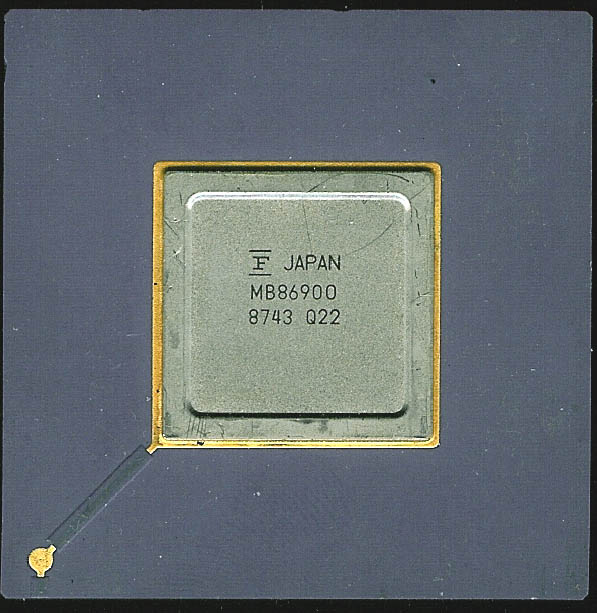
Fujitsu MB91696AM

Qualcomm showed off the  APQ8060 in HP’s new TouchPad.  This is a dual core version  Snapdragon processor we have become very familiar with. Qualcomm has an architecture license from ARM so they are free to design their own cores without having to stick to ARMs own implementations (such as Cortex-A9 etc).  This gives Qualcomm more flexibility to design in features they need, and tweak design more best efficiency.

Smart phones aren’t the only ones getting new processors.  Digital cameras now require immense amount of processing power (especially to handle 1080p video recording.  Fujitsu (yah, they still make a lot of processors) announced the Milbeaut MB91696AM.  This is a dual core ARM processor with many other DSP functions capable of handling 14Mpixel shooting at 8fps, as well as full HD video.

Tags:
, , , , ,

Spread this post:
  • Digg
  • Sphinn
  • del.icio.us
  • Facebook
  • Mixx
  • Google Bookmarks
  • DZone
  • Reddit
  • StumbleUpon
  • TwitThis

Posted in:
Processor News

February 8th, 2011 ~ by admin

Qualcomm for Apple: The iPhone 4 CDMA

After years of waiting Apple has released the CDMA version of the iPhone 4.  Obviously the first carrier that comes to mind with the CDMA iPhone (and who it is being released with) is Verizon.  However, the largest CDMA carrier in the world, with over 90 million subscribers, is China Telecom.  One can imagine this is also going to be a pretty good market for Apple. The design is relatively the same as the GSM version with one major change.  The baseband processor has been changed from an Infineon X-Gold 618 to a Qualcomm MDM6600.  This is a pretty big detriment to Intel, who purchased Infineon’s wireless unit just last year. You can see the specs of the GSM iPhone 4 here, as well as all previous iPhones.

Qualcomm MDM6600 - 512MHz ARM1136 - image: iFixit

The MDM6600 (Gobi) is actually a GSM/CDMA solution, but due to antenna limitation (is anyone surprised?) it is built for CDMA only.  Once again this is an ARM powered chip.  The MDM6600 main core is a 512MHz ARM1136JS.  The X-Gold 618 of the GSM iPhone 4 runs a 416MHz ARM1176.  The ARM1136 is roughly the same as the 1176 with a few features removed.

This is good news for Apple, and certainly good news for ARM as millions of more devices with ARM processor cores will be sold.  It will be interesting to see which baseband provider Apple selects for the iPhone 5 which should support 4G.

Tags:
, , ,

Spread this post:
  • Digg
  • Sphinn
  • del.icio.us
  • Facebook
  • Mixx
  • Google Bookmarks
  • DZone
  • Reddit
  • StumbleUpon
  • TwitThis

Posted in:
Processor News

January 6th, 2011 ~ by admin

The day has come, ARM + Microsoft Windows

Over a year ago we wrote about the need for native support of ARM cored processors by Windows (and not just Windows mobile).  Yesterday at the CES Microsoft officially announced it will be supporting ARM processors as well as ARM SoC’s in Windows 8, and demo’d several such systems.  This is very important to the landscape of processors.  Obviously software support will be initially lacking but this brings much needed competition to the PC market.

Intel and AMD have been competing with each other, and each other alone (with a few exceptions) for almost 10 years now. Bringing full fledged Windows to a new architecture is not unprecedented.  Windows NT 4 ran on x86, MIPS, PowerPC as well as the Digital Alpha.

Nvidia, already very talented in the GPU market, has been working on ARM processors for a couple years now with its Tegra line, so its not surprising that they have also announced development of a ARM based processor/GPU targeted for the desktop known as Project Denver.

VIA is also adding some more competition with the release of their first dual core processor, the Nano X2, based on the Isaiah architecture.  While not known for brute force, the Nano is known for its low heat and power sipping capabilities.

2011 is off to a great start and we look forward to seeing many new processors released, as well as old processors added to the museum

Tags:
, , ,

Spread this post:
  • Digg
  • Sphinn
  • del.icio.us
  • Facebook
  • Mixx
  • Google Bookmarks
  • DZone
  • Reddit
  • StumbleUpon
  • TwitThis

Posted in:
Processor News

November 18th, 2010 ~ by admin

Qualcomm Announces new SnapDragon Processor

Snap! Just 4 days after we posted about next generation Applications processors Qualcomm has announced the next version of the Snapdragon, the MSM8960.  They are moving to a 28nm process (likely TSMC or Global Foundries) and of course dual cores.  Qualcomm is also promising a 5x performance increase, which means they are likely reworking the Scorpion core and likely adding Out-of-Order Execution which offers a significant speed boost.  Graphics speed will also be increased with an updated Adreno graphics core.  The other important detail is that the MSM8960 supports all 3G and LTE modes, making it a single chip solution for pretty much the entire world market. It also, of course, integrates bluetooth, wifi, and GPS.

This should put Qualcomm in a very competitive position against the Tegra 2, OMAP4, and the new Samsung Orion.

All of this at a 75% reduction in power levels. Suddenly my HTC Incredible, isn’t.

Tags:
, ,

Spread this post:
  • Digg
  • Sphinn
  • del.icio.us
  • Facebook
  • Mixx
  • Google Bookmarks
  • DZone
  • Reddit
  • StumbleUpon
  • TwitThis

Posted in:
Processor News

November 18th, 2010 ~ by admin

AMD Bobcat splits the Atom to the Core

AMD recently released the Bobcat line of APUs (Accelerated Processing Units).  These are part of their new ‘Fusion’ line which integrates fairly simple, yet fast, CPU cores with Radeon graphics.  Several sites have benchmarked the Bobcat against the Intel Atom and the results are rather amazing. Engadget has a list of benchmarks as well.

AMD Bobcat Fusion APU - Zacate

The dual core 1.6GHz E-350 dissipates a mere 18W, and containing a Radeon 6310 500MHz 80 core GPU.  In various application tasks it handily beats the Intel Atom, and in video tests (gaming etc) its integrated Radeon GPU does remarkably well.  Its good to remember that the E350 (and others in its family) are designed for netbooks, tablets, etc.  Its good to see AMD taking a bite out of Intel’s Atom.  Its this sort of competition that drives technological advances, and makes processors out of date fast enough for CPU collectors to pick them up.

Tags:
,

Spread this post:
  • Digg
  • Sphinn
  • del.icio.us
  • Facebook
  • Mixx
  • Google Bookmarks
  • DZone
  • Reddit
  • StumbleUpon
  • TwitThis

Posted in:
Processor News

November 14th, 2010 ~ by admin

The next Generation of Application Processors

Current smartphones have an impressive amount of processing power, and its getting better yet.  Samsung’s new Orion chip has now been spotted running in the wild.  This is one of the first of the next generation of mobile Application Processors.

Nvidia Tegra

In 2008 a smart phone would have a ARM11 class processor running at around 500MHz.  The original iPhone, and the iPhone 3G used one made by Samsung running at 412MHz.  The first Android phone (the Google G1/HTC Dream) used a 528MHz Qualcomm MSM7201A ARM11 processor.  The original Nvidia Tegra CPUs also fall into this class.  We’ll consider this the first generation of the TRUE smart phones as before the iPhone, smart phones were of limited use, and rarely had things likely fully working internet browsing etc.

Qualcomm QSD8250 Snapdragon

The second generation of smart phones significantly increased in processing power.  These are the phones that we use today.  The majority of these run on some version of the ARM Cortex-A8 processor.  These processors are single core 600MHz-1.3GHz devices.  Perhaps the best known are the Apple A4 (Samsung Hummingbird), the Qualcomm Snapdragon (really a custom ARM core called the Scorpion similar to the Cortex-A8 crossed with a Cortex-A9), and the TI OMAP3 series.  Second generation Application Processors also have brought some pretty powerful graphics to phones.  These are integrated onto the same die as the Cortex-A8 and usually are PowerVR (Apple/Samsung and TI), Adreno (Qualcomm from ATI), or Mali (ARMs own GPU) based.

Samsung Orion ARM Cortex-A9 Dev Board

The smart phones of 2011 will begin using the third generation of Application Processors.  These are defined by being based on the ARM Cortex-A9, a faster and more efficient ARM core, as well as typically being a dual core (or better) device.  The TI OMAP4 series fits this description. Qualcomm will continue with the Snapdragon line, but bring it to a dual-core 1.5GHz chip. Apple is an unknown, but will likely up the speed of the A4, or add a core to it.  Samsung;’s Orion is a dual-core 1GHz A9 with a quad core Mali GPU.  It also packs 32KB of L1 cache per core and a full 1MB of L2 cache. Nvidia has the Tegra 250 already, which powers a handful of devices such as the Zune HD.  These processors will handily run full 1080p video, as well as drive external displays.  Your phone will soon be able to play movies on your TV.

ARM Cortex-A15 Eagle

What will the future bring?  ARM Cortex-A15, the Eagle, is a 2.5GHz quad core.  Hopefully it can run without depleting our batteries in an hour.

Tags:
, , , ,

Spread this post:
  • Digg
  • Sphinn
  • del.icio.us
  • Facebook
  • Mixx
  • Google Bookmarks
  • DZone
  • Reddit
  • StumbleUpon
  • TwitThis

Posted in:
Processor News

September 23rd, 2010 ~ by admin

Arithmetic Processors: Then and Now

In the beginning there was the microprocessor.  A collection of logic that centered around an ALU (Arithmetic and Logic Unit) and a series of registers.  It was capable of doing most tasks just fine.  Simple math, and boolean logic were the key to most programming needs.  As the life of the processor and its extension, the microcontroller, progressed the computing needs became larger.  Programmers wanted to be able to manipulate larger numbers, and floating point ones at that.  Add and Subtract were no longer sufficient, division, multiplication and a host of other mathematical functions were needed.  In the 1970′s transistor counts were in the thousands, frequency in the MHz and line widths were measured in microns.  It was not feasible to build these math functions, in hardware, on the same chip (or rather die) as the processor.

AMD AM9511DM - 2MHz Military Temp Range APU - 1978

Several companies worked to solve this.  Perhaps the most successful, and famous, was AMD.  AMD in 1977 introduced the AM9511 Arithmetic Processing Unit.  It is best described as a scientific calculator on a chip. It could handle 32 bit double precision math (via 16 bit stack/registers) and supported not just the basic ADD, SUB, MUL and DIV, but SIN, COS, TAN, ASIN, ACOS, ATAN, LOG, LN, EXP, and PWR. 14 floating point instructions, in hardware, on a single chip.  It ran at up to 3MHz (4MHz in the ‘A’ version) and could interface with pretty much any microprocessor or microcontroller, providing much needed processing power.  It was designed as a peripheral, so that the main processor could assign it a task, and then go on about its program while the AM9511 crunched the math.  The AM9511 would then notify the host processor via interrupt that it was finished the the data/status was ready to be read.

AMD updated the design to support……

Read More »

Tags:
, , , ,

Spread this post:
  • Digg
  • Sphinn
  • del.icio.us
  • Facebook
  • Mixx
  • Google Bookmarks
  • DZone
  • Reddit
  • StumbleUpon
  • TwitThis

Posted in:
Processor News, Research