April 1st, 2009 ~ by admin
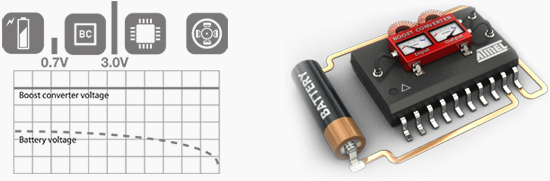
Most mobile electronics runs on around 3V. For example your cell phone typically used a 3.7V Li Ion battery. For some applications this much battery is not wanted, or feasible. A single AA battery produces 1.2-1.5Volts, but as it is used this voltage will drop. Atmel has just released a new line of their Tiny AVR (RISC microcontrollers that can run at voltages down to 0.7V. Internally they are a 3V design, but they include a boost converter that can boost voltages from 0.7V to 1.8V to the 3V needed by the core, as well as the 4k of flash and 64bytes of on-board EEPROM.
ATtiny43u
All of this, in a 20 pin package running at up to 8MHz and costing a mere $1. This is why there is a microcontroller in almost every piece of electronics.
April 1st, 2009 ~ by admin
Freescale is beginning to turn out new embedded processors on a 45nm process. The same process size Intel uses to make the Corei7 CPU’s Freescale is using to make 6 PowerPC cored devices for the communications market. With speeds of up to 1.3GHz at only a few watts the performance is rather good.
The target market is 3G and 4G cellular base stations.
Source: EE Times
March 28th, 2009 ~ by admin
Microchip has now shipped almost 7 billion of the legendary PIC processor line. Still being made, and improved today, the PIC has been around for a very very long time. General Instruments created the PIC16 in 1975 to make up for the bad I/O of their CP1600 line. Later GI spun this off into Arizona Microchip Technologies in the late 1980’s and what is known today as simple Microchip.
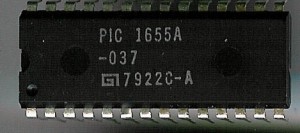
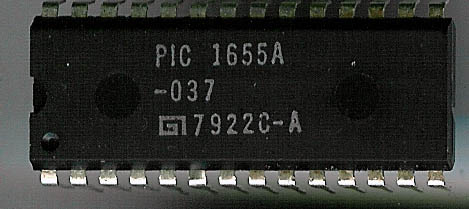
GI PIC1655A
Here is an original PIC1655A made in 1979.
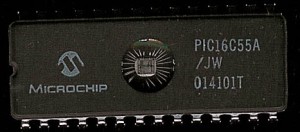
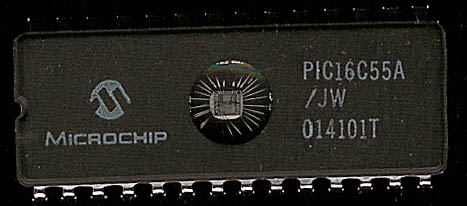
Microchip PIC16C55A
And here is the same part (albeit now in CMOS) made in late 2001. Old designs such as the PIC, and the MCS-51 remain immensly popular, they are inexpensive, and have over 30 years of code base to work with.
March 27th, 2009 ~ by admin
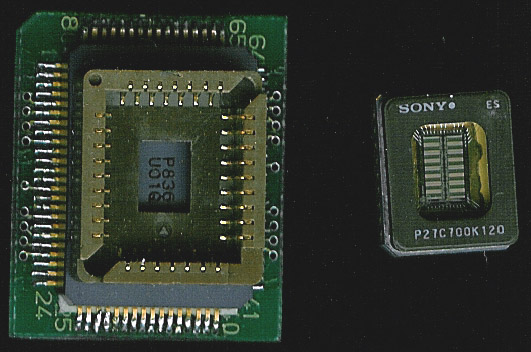
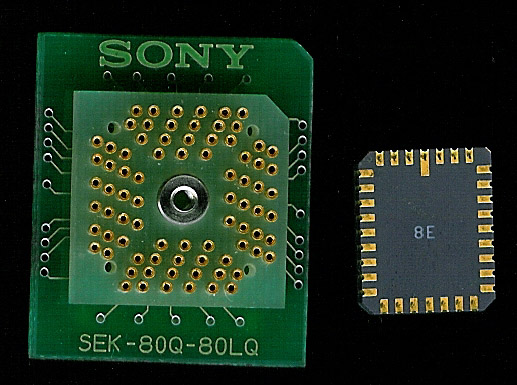
I recently was surfing eBay and found some Sony microcontrollers, while looking over the datasheet, I noticed the package looked very familiar, a stacked MCU, over a LCC EPROM. I have a similar device in the museum.
Sony CXP83601
I had not been able to previously identify it as all it said was P836U01, once I added the ‘CX’ in front, it all made sense, and I found its datasheet (albeit in Japanese) its a 10MHz 8bit SPC700 MCU w/ LCD controls and the EPROM is a highspeed 27512 type device (CXP27C7001)
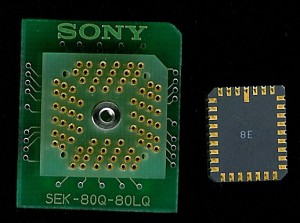
Sony CXP83601
March 18th, 2009 ~ by admin
If you haven’t noticed, we haven’t added new CPU’s to the museum in sometime. Not to fear, we have been getting LOTS more. It just became a huge time killer to upload and add them. Currently we have the programmers building a whole new database system for easily managing all the chips in the museum.
How many processors do we have that need added to the site? Over 1500. Enjoy
March 12th, 2009 ~ by admin
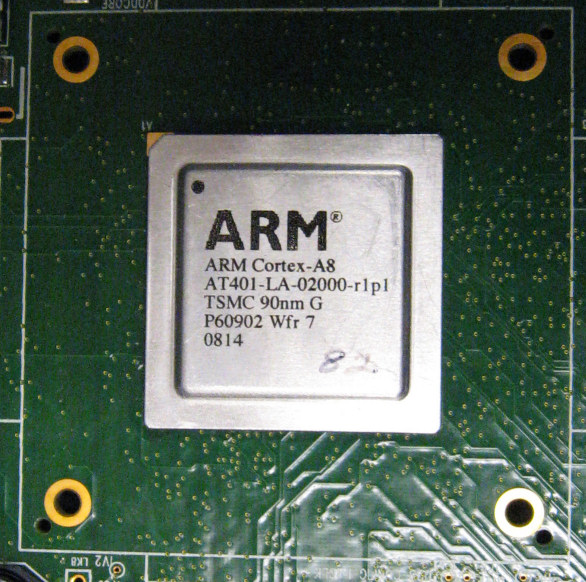
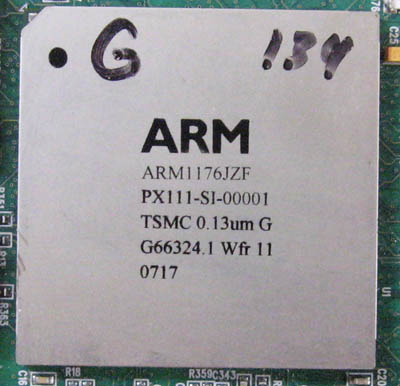
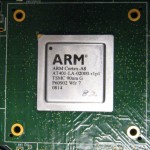
ARM is solely an intellectual Property company. They design, and then license production of their ARM cores to other companies. However when they create a new core, they DO have it produced, in silicon for testing, and for use in toolchain makers to develop compilers etc for.
ARM Cortex-A8
Here are 2 such devices, one the ARM Cortex-A8, which in its fastest version (1100MHz+) can handily beat an Intel Atom in netbooks. The Cortex-A8 is used in the just release Palm Pre.
ARM1176
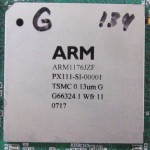
The ARM1176JZF is used in such devices as the iPhone. Both of these were fabbed by TSMC.
Thanks to Mr. Boys of ARM for the photos.
March 2nd, 2009 ~ by admin
Intel, made their long anticipated announcement today. Much speculation floated last week as to what they were to announce. Today they announced a partnership with TSMC in manufacturing the Atom CPU core. Intel is hoping to take on the likes of ARM, and XAP, and other licensed cores by doing so. TSMC excels in integrating third party designs and will do so with the Atom, the idea being to build custom ASICS’s and SoC’s around the Intel Atom core. This MAY be a boon to Intel, allowing them to finally break into the mobile devices (phones etc) in a much broader way then the old PXA line that they sold to Marvell.
Source: Forbes
March 2nd, 2009 ~ by admin
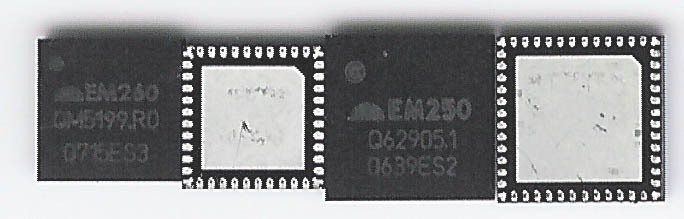
Recently we have talked a lot about two important CPU architectures, the XAP, and the ARM. ARM recently announced the Cortex-M0 which is implemented in 12,000 gates. Today we received some samples from Ember, makers of very efficient ZigBee wireless chips. Their two main ZigBee solutions are the EM250 SoC, and the EM260 co-processor. As the heart of each of these designs is a XAP2b processor core. a 16 bit RISC design running at 12MHz and implemented in 12,000 gates.
Ember EM250 & EM260 XAP cored ZigBee SoC's
The EM250’s chip area of a mere 7mm square, but pack an enormous punch, integrating a complete ZigBee wireless radio, 128Kb of flash, and 5Kb of RAM.
February 23rd, 2009 ~ by admin
ARM today announced their new embedded microcontroller core. The next in the Cortex line. The M0 implements the standard ARM7 instruction set architecture, but manages to do so in only 12,000 gates. They did so by sacrificing performance for a smaller foot print and power savings. This certainly isn’t the first RISC CPU with such a small foot print. The XAP-RISC processor also manages to do so in 12,000 or so gates.
12,000 gates translates into around 50,000 transistors, which is about the footprint of the Intel 80186 processor. In today’s world of multi-million transistor ASIC’s you’ll see this ARM core everywhere (likely you wont even know its there) . To drop in a 12,000 gate block into a modern ASIC design is nothing, and the benefits can be amazing giving the 32 bit code base available for the ARM.
Source: EE Times
February 20th, 2009 ~ by admin
In a recent deal to try to solve their cash problems, and streamline profitability, Zilog sold off its secure transaction products (namely 32bit ARM processors) to Maxim (who through the purchase of Dallas, makes many MCS-51 controllers), They also sold off their wireless division to Maxim (and the software portion of this to a company called UEI)
What does this leave? Essentially the classic Z80 processor that has been around for the last 33 years, and all the related extentions there of. Old designs tend to stick around for a long time, and the Z80 is no exception.
Source: EE Times