November 9th, 2009 ~ by admin
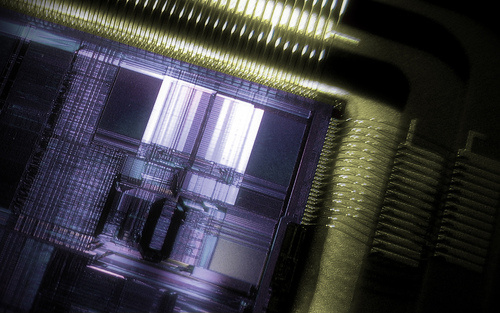
As EPROM capacities increased due to insatiable demand for more storage, die sizes increased rapidly as process shrinks could not keep pace. This is the result.
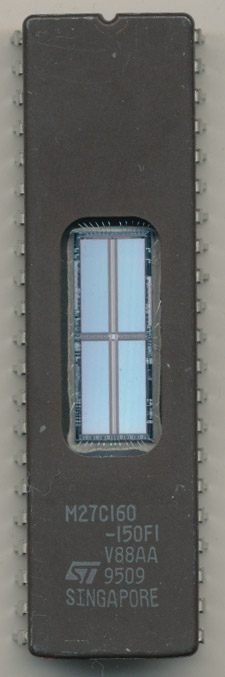
ST M27C160-150F1
This is a 16Mbit EPROM from ST from around 1995. Today we have Flash, and in the same space can store Gigabytes of data.
October 7th, 2009 ~ by admin
Perhaps 2 of the most famous RISC architectures, ARM, and MIPS, have been around for years. Like many well designed architectures, they continue to be adapted, enhanced, and used in litterally billions of devices.
Recently Altera (maker of FPGAs and CPLD’s) licensed the use of the MIPS32 core. This is a first for MIPS, as they now join ARM, and PowerPC as major cores available in FPGAs. Source: EETimes
On the topic of ARM, they have been working extensively recently with GlobalFoundries to provide customers with proven IP, specifically the ARM Cortex-A9. They are developing as a SoC core on a 28nm process. ARM currently works with TSMC to test, and prove various cores on TSMC’s process, and now will do so with GlobalFoundries. What this does in enable system builders to have IP blocks that are PROVEN on a given manufacturing node. It takes some of the guess work, and certainly risk, out of developing a ASSP, ASIC, or SoC.
September 25th, 2009 ~ by admin
Yah a bit of merger madness, NEC Electronics has merged with Renesas, further consolidating the Japanese microcontroller market. This will put the new company third in global IC sales, behind only Intel and Samsung. It will be interesting to see which products survive the merger, as there will be some overlap.
What does this mean for CPU collectors? Just as happened when Mitsubishi and Hitachi merged, deprecated and eliminated devices will become increasingly hard to find data on.
Source: EE Times
September 16th, 2009 ~ by admin
In case you missed it last week, GlobalFoundries (the company AMD spun off to manage its foundries) has acquired Chartered Semiconductor in Singapore. This changes the playing field a lot in the foundry world. A world dominated by UMC and TSMC.
Acquiring Chartered allows GlobalFoundries to dissolve some of AMDs interest in the company, as well as bring on board many more customers. Before, Global only had AMD, and STm as clients, now they have all of Chartered’s which includes such names as Toshiba, and Microsoft.
A game changer for sure. While they are not as big as TSMC, they certainly will be making TSMC look over their shoulder more. This will help the foundry industry remain competitive and force TSMC and GlobalFoundries to remain innovative and on the cutting edge of fab technology.
September 6th, 2009 ~ by admin
The SuperH line of microcontrollers (really full up processors now) was originally developed by Hitachi. They have found wide use in applications spanning printer controllers to automobile control systems. Renesas just announced yet another member of the SuperH family. The SH7264 and SH7262 both include the now common SH-2A RISC core running at 144MHz as well as a FPU, but now integrate up to 1Mbyte of SRAM on die as well as many video functions.
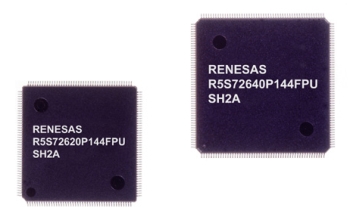
Renesas SuperH SH7264 and SH7262
These chips can now drive displays without the need of external RAM, saving cost, and board space. Expect to see them in such things as car navigation systems, copy machines and the like.
Source: eeProductCenter
September 4th, 2009 ~ by admin
Its chip related I suppose, but mostly just really cool and they make awesome desktop wallpapers.
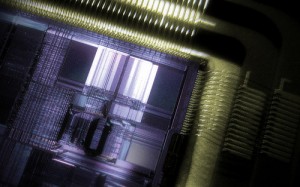
Die Wallpaper
Check out more at Lifehacker
July 27th, 2009 ~ by admin
When you think of Atmel what do you typically thing? High Speed 8051 microcontrollers and AVR RISC processors. Maybe the occasional EEPROM. But there is another side of Atmel.
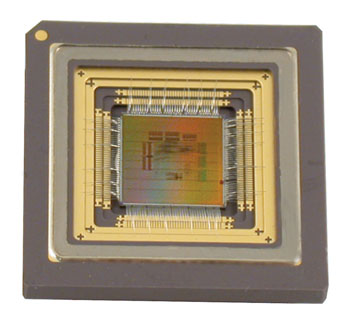
Atmel AT697F Rad-Hard SPARC
Atmel also makes a line of radiation hardened space qualified SPARC CPU’s. These are used extensively by the European Space Agency and other satellite builders. Atmel just released anew one too. The AT697F, a revision of the AT697E. What can it do? well oits a full 32bit SPARC V8 core, running at 100MHz (90MIPS). Its made on 0.18u which is very impressive for a space based processors. Most of Atmels other designs are basing on a half micron process.
A larger process like half a micron gives increased radiation resistance, but at the expense of speed. At 0.18u Atmel has got the speed up to 100MHz, AND increased radiation tolerance to 300krads. To put that in perspective, a dose of only 1 krad (1000 rems) will kill you 99% of the time so these processors can continue to function at over 300 times that.
Source: EE Product Center
June 12th, 2009 ~ by admin
Space can often be at a premium, especially in embedded design. The original 8051 microcontroller was about 750 sq mm. SiLabs new one? yah all of 4mm^2, and has more features, and is faster. It includes I2C and UARTs integrated in hardware, and an onboard 24.5MHz oscillator.
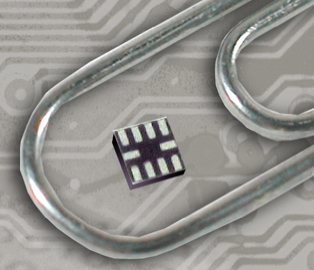
Silicon Labs C8051T606
Source: EE Times
May 26th, 2009 ~ by admin
Sony recently released their touchscreen walkman, which is a pretty slick device. Sony Insider dissected one and what is absent, is about as interesting as what is there. Sony use to be a pretty big manufacturer of in house IC designs, everything from DSP,s to processors (like the Cell used in the PS3) to analog parts. So in this new walkman you would expect to see the Sony name on at least one or 2 parts. The main processor is a NEC ARM chip, RAM by Hynix, and Flash by Samsung so all said a pretty much off the shelf build.
May 16th, 2009 ~ by admin
TI has purchased Luminary Micro for an undisclosed amount of money. TI, one of the larger producers of embedded processors, and applications processors for mobile phones add significantly to their portfolio by adding Luminary, maker of ARM Cortex based microcontrollers. Most of TI’s line of processor are now ARM based. They do of course also make MCS-51 products as well as their VERY widely used DSP series (such as the TMS320 series).
Source: EE Times